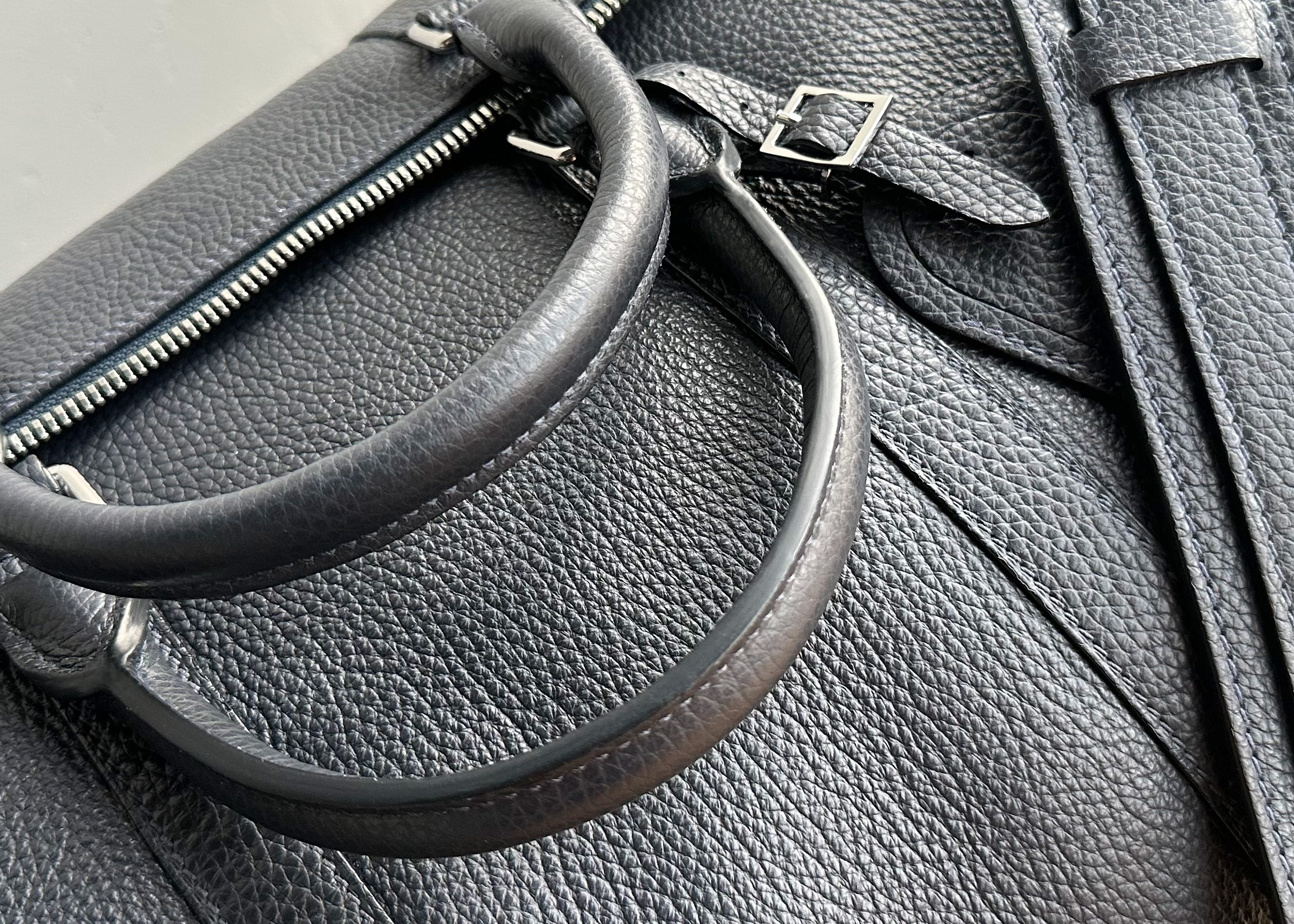
Watch strap lining replacement service is not just a repair of a worn part, but one of the ways to extend the life of a strap, improve wearing comfort, and, when necessary, adapt it to the specific needs of its owner.
The lining is the part of the strap that remains in constant contact with the skin of the wrist. It is the first to absorb moisture, perspiration, friction, and the effects of daily wear. Over time, even a well made strap may retain a respectable appearance on the outer side while still requiring lining replacement because of wear, reduced comfort, or changes in the structure of the leather.
More broadly, the lifespan of a leather watch strap depends on several factors, including the conditions of wear, moisture exposure, and the way the strap interacts with the skin. I discuss this in more detail in my article on the durability of natural leather watch straps.
What Watch Strap Lining Replacement Can Improve
Such work may be relevant in different situations. Sometimes it is simply a matter of natural wear on the inner side of the strap. In other cases, the reason may be individual skin sensitivity or an allergic reaction to standard materials. There are also cases where the owner wants to replace the lining with one that feels more pleasant to the touch, more natural, or, on the contrary, more resistant to moisture and daily use. Sometimes the task may be even simpler, for example, changing the colour of the lining. Quite often, clients ask for a black lining, partly for a practical reason: traces of wear, dirt, and darkening are usually less visible on it.
Lining replacement makes it possible not only to restore the strap, but also, to a certain extent, to reconsider the way it performs in use. Depending on the task, the strap may be made softer, more stable, or more practical for a particular wearing routine. In that sense, watch strap lining replacement service is not only restorative work, but also a way to adapt a strap more precisely to everyday use.
Different materials may be used for this kind of work. It may be natural leather with good tactile qualities, a more delicate lining for sensitive skin, or a moisture resistant material if the strap is worn actively and regularly exposed to perspiration and a humid environment. The choice always depends on the condition of the strap itself, its construction, and the expectations of its owner.
As a rule, this kind of work is not limited to replacing the inner layer alone. If necessary, the construction of the strap can also be reinforced in certain areas. The edge paint is usually renewed as well: the old finish is removed and a new one is applied. If the strap was originally stitched, such work will usually also require the stitching to be replaced. At the final stage, the outer side may also be treated with conditioning or restorative leather care products. As a result, the strap receives not only a new inner side, but often a noticeably fresher, more cohesive, and better cared for overall appearance.
However, lining replacement does not make sense in every case. Sometimes the condition of the strap, its age, or the overall degree of wear suggests that making a new strap would be the more appropriate solution than restoring the old one. For that reason, each case should be considered individually.
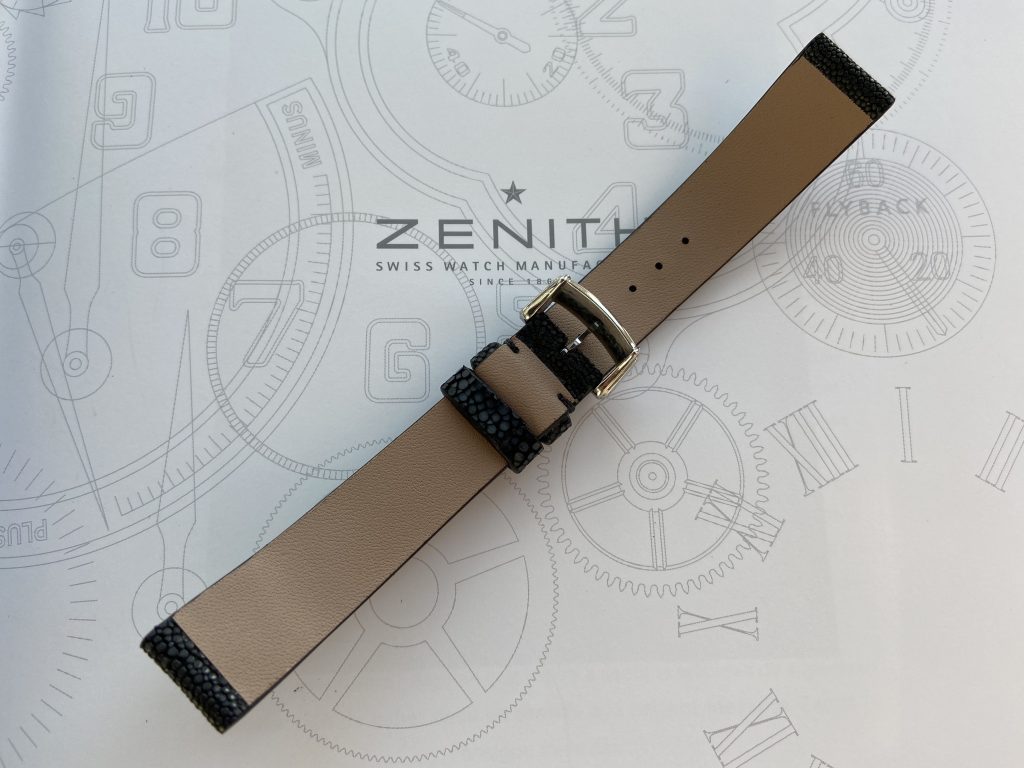
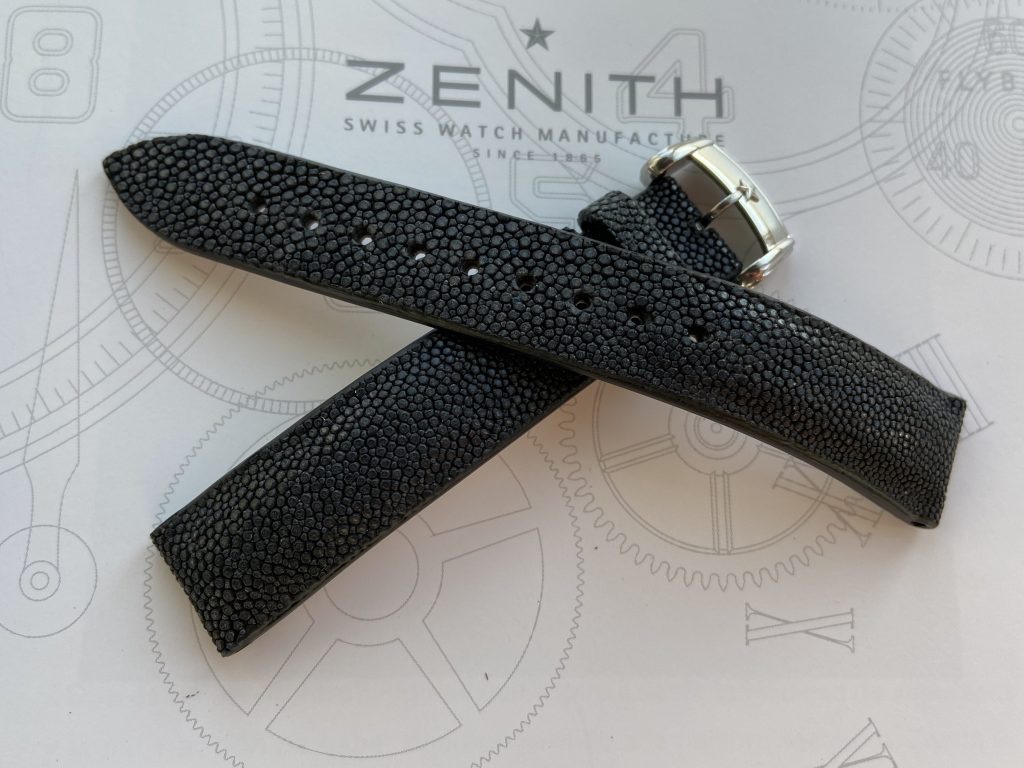
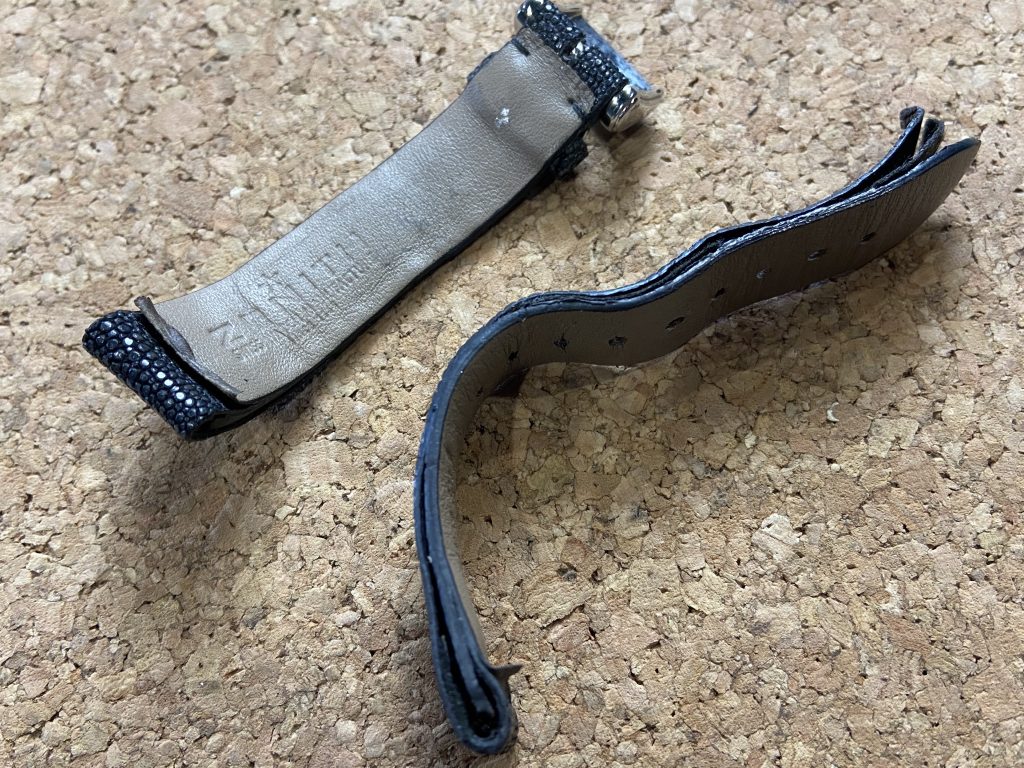
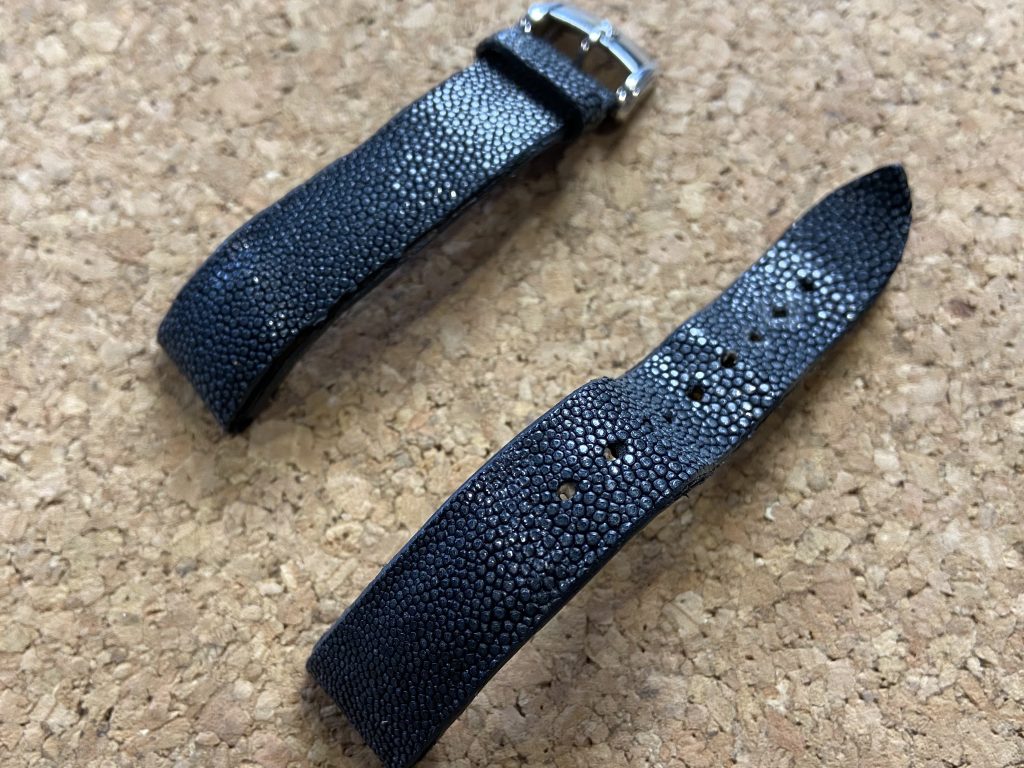
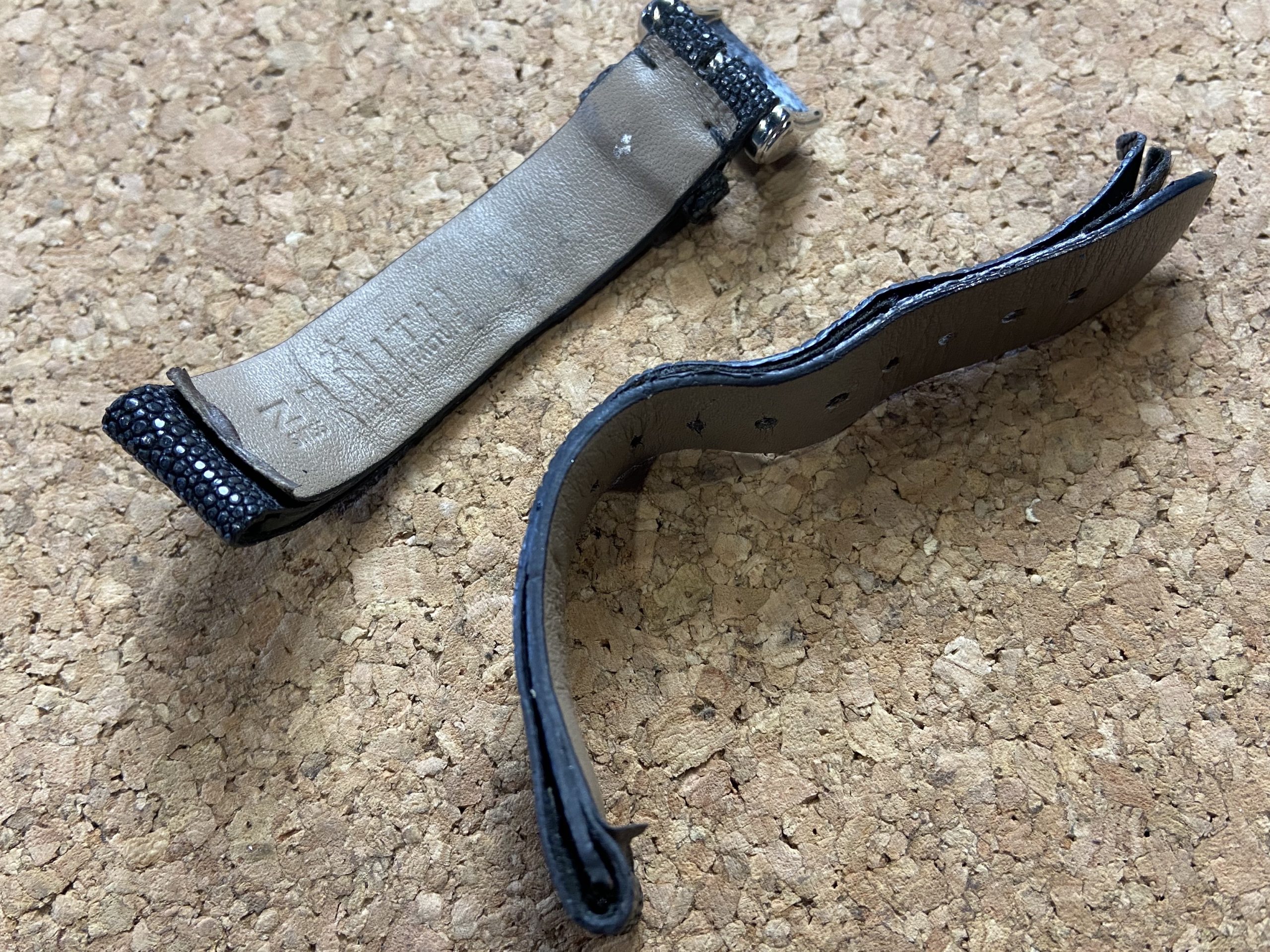
The photographs below show one example of such work. This strap is made of polished stingray leather, a material known for its high resistance to external wear. In cases like this, the outer side may remain in very good condition even when the inner side already requires attention. That is exactly why lining replacement can be a reasonable and justified solution here.
This kind of procedure makes it possible to preserve a familiar strap when its outer side is still suitable for further use, while the inner side already needs renewal. In some cases, it becomes a sensible compromise between partial restoration and making a completely new piece.


Before/After photo